
February is Black History Month, a designation that also calls upon the LGBTQ community to acknowledge the many outstanding queer BIPOC who have contributed to a rich history that is deeply interwoven with American history. Their stories provide critical insight into the nation’s progress in civil rights, social justice, and cultural evolution. To understand American history fully, it’s essential to acknowledge how Black queer individuals have shaped and influenced pivotal movements, art and thought in the U.S. Despite facing intersectional challenges related to both race and sexual orientation, Black queer Americans have persistently fought for visibility, acceptance, and equality, contributing a legacy that has strengthened America’s commitment to inclusion and diversity.
The contributions of Black queer Americans to political activism are also inseparable from American history, especially when considering the origins of LGBTQ+ advocacy. These activists confronted police harassment and societal prejudice, laying the groundwork for the LGBTQ+ rights movement in the U.S.
Here are the stories of but a few.
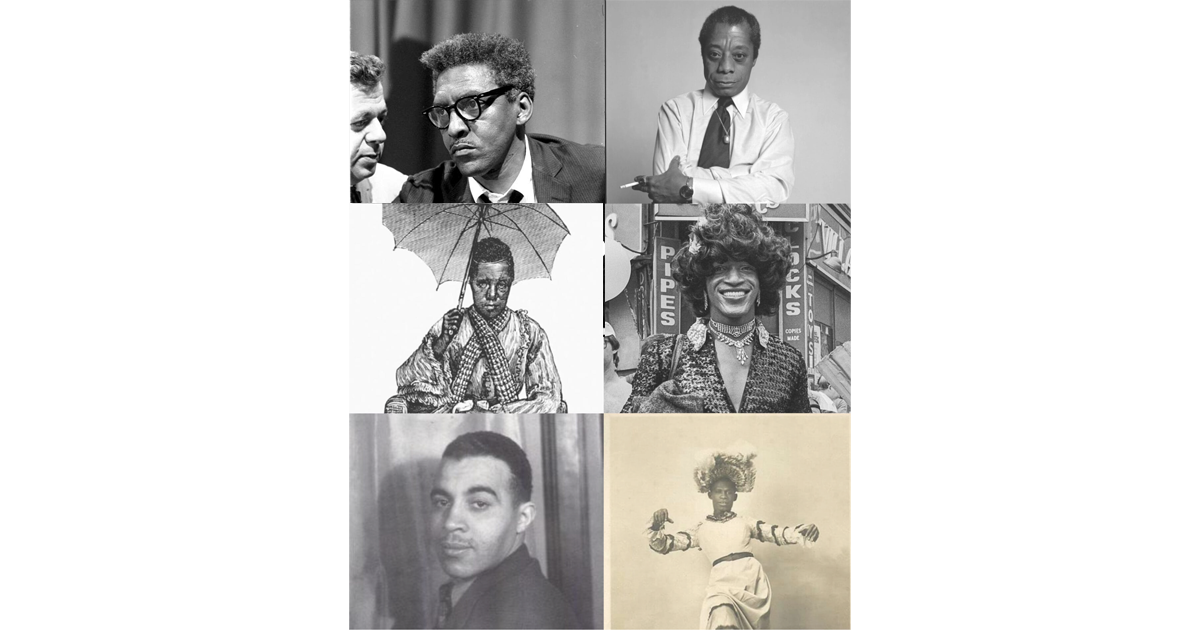
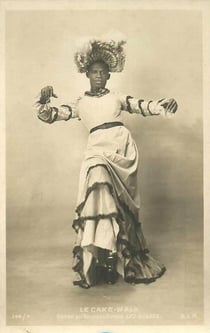 William Dorsey Swann, the first drag queen.
Swann was born into slavery in Maryland just before the Civil War. In the 1880s, as a young adult, he moved to Washington, DC to find work to help support his parents and siblings. In Washington, he found the Emancipation Day parade, an enormous annual celebration commemorating the end of slavery in the US capitol. The highlights of the parade were called queens: Beautiful, crowned Black women who personified African Americans’ newfound freedom. The queens of Emancipation Day so inspired Swann, that he adopted the title “queen” for himself at the secret dance that he and his friends called “a drag.” The word “drag” possibly comes from a contraction of “grand rag,” which is an early term for a masquerade ball.
Swann consistently resisted the censorship of their drag balls and continued to organize and hold events in Washington D.C. for several years. Swann was sentenced, in 1896, to 10 months in prison for the false charge of ‘keeping a disorderly house,’ also known as a brothel.” That made Swann the earliest documented American activist to take steps to defend the queer community.
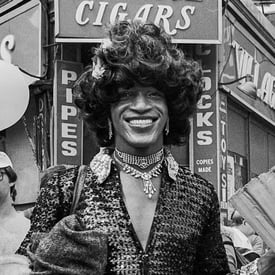 Marsha P. Johnson, transgender LGBTQ activist
Johnson was a central figure in the Stonewall Riots of 1969, which ignited the LGBTQ+ rights movement. Born in 1945 in Elizabeth, New Jersey, Johnson moved to New York City’s Greenwich Village at age 17, where she found community among other LGBTQ+ individuals. Known for her vibrant personality, distinctive flower crowns, and colorful sense of style, Johnson became a beloved figure within the LGBTQ+ community and an enduring symbol of resistance against injustice.
Along with Sylvia Rivera, a Latina transgender activist, Johnson co-founded the Street Transvestite Action Revolutionaries (STAR) in 1970, an organization dedicated to providing housing and support for homeless LGBTQ+ youth. STAR became one of the first LGBTQ+ organizations in the U.S. to focus specifically on transgender issues.
Bayard Rustin Civil Rights organizer and activist
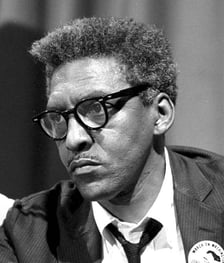 Rustin’s organizational skills, strategic thinking, and commitment to nonviolent protest were instrumental in bringing over 250,000 people to the Lincoln Memorial in a peaceful and powerful demonstration for civil rights. Rustin also introduced King to the principles of nonviolent resistance, drawing from his own experiences working with pacifist leaders and the teachings of Mahatma Gandhi.
Many leaders saw his open homosexuality as a liability that could be used by opponents to discredit the movement. He was often forced into the background, where he worked tirelessly but with little public recognition. Nonetheless, he continued to advocate for civil rights and social justice and never wavered in his commitment to both causes, embodying the idea that justice must be intersectional. Later in life, Rustin became an advocate for LGBTQ+ rights, recognizing the connections between the struggles for racial and sexual equality.
Frances Thompson, transgender civil rights activist
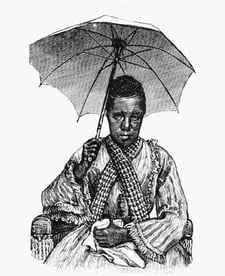 Frances Thompson was a formerly enslaved Black transgender woman who became a significant figure in the post-Civil War era. Frances Thompson is one of the earliest known trans women to testify before Congress whose harrowing congressional testimony about the Memphis race riots of 1866 helped shape the course of Reconstruction.
In 1866, Thompson and a friend, Lucy Smith, both Black women, were victims of a brutal assault during the Memphis Riots. These riots were fueled by racial tensions and erupted into violent attacks on the Black community by white mobs, including former Confederate soldiers. Thompson and Smith testified before Congress about the assault, bravely detailing the violence inflicted upon them. Their testimony was significant because it provided firsthand accounts of racial and sexual violence against Black women during a time when such injustices were often ignored or minimized by the legal system. It galvanized support for the 14th Amendment, which provided Black Americans with citizenship rights and the promise of equal protection. Historian Channing Gerard Joseph recounted with Mills Performing Arts that Thompson’s testimony, “one of the linchpins in getting the political will together to pass legislation to protect the civil rights of newly emancipated Black people and also to bring political will behind Reconstruction after the Civil War.”
James Baldwin, author
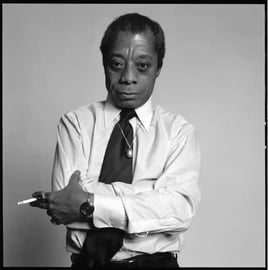 Born in Harlem in 1924, Baldwin became one of the first Black authors to write openly about homosexuality, challenging societal norms and sparking conversations about the intersection of race and queer identity. His contributions are seen as foundational to understanding queer experience in America, especially for queer people of color. Baldwin’s 1956 novel, Giovanni’s Room, broke new ground by centering a story around same-sex love. Baldwin’s depiction of the protagonist’s struggle with his sexual orientation resonated deeply with readers and became a classic work in LGBTQ+ literature.
In addition to his fiction, Baldwin wrote numerous essays that delved into his personal experiences as a gay Black man in America. In essays like “The Fire Next Time” and “No Name in the Street,” Baldwin discussed his experiences with racism, religious conservatism, and the dangers of societal repression. He argued that homophobia and racism were both forms of oppression aimed at controlling people’s identities and limiting their freedom.
Richard Bruce Nugent, author
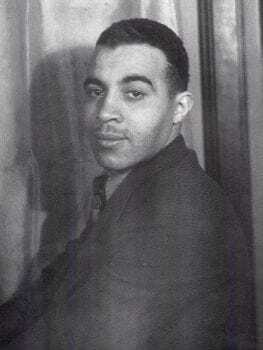 Nugent’s most famous work, Smoke, Lilies, and Jade, published in 1926, is one of the earliest known literary works by an African American to feature same-sex desire openly and unapologetically. The story, a semi-autobiographical narrative written in a stream-of-consciousness style, tells the story of Alex, a young Black man exploring his attraction to both men and women. In depicting same-sex love, Smoke, Lilies, and Jade broke significant ground by challenging the boundaries of sexual identity and freedom in a time when such themes were rarely, if ever, publicly acknowledged within Black or mainstream literature. Nugent’s willingness to address queer themes so directly helped set the stage for future generations of Black LGBTQ+ writers and artists.
Nugent’s art and activism also extended beyond his writing. He was a painter and illustrator whose work explored themes of sensuality, spirituality, and race. He contributed to the movement’s legendary publication Fire!!, an influential but short-lived literary magazine created by Black artists to challenge the social norms and conservative values within both Black and white communities. Though Fire!! only published one issue, it became a defining moment in Black literary and cultural history, emblematic of the Harlem Renaissance’s daring, provocative approach to art and social issues.
Black queer history is American history, offering unique perspectives on resilience, artistry, and the fight for equality. To recognize these contributions is to embrace the full spectrum of American heritage and honor the essential roles Black queer individuals have played in the nation’s progress.